There is no shortage of promising ideas aimed at social and environmental challenges. The harder question is what happens after the idea is built.
How does a solution move from something promising to something an organization is willing to test, fund, adopt, or scale? That gap between innovation and adoption is where a lot of good work gets stuck.
Founders need opportunities to prove that their solutions work in real conditions. Institutions need enough evidence to justify trying something new. Funders want to understand whether an approach can create meaningful results, and communities need solutions that respond to their realities, not assumptions.
The challenge is not only creating innovation. It is creating a path for innovation to move.
What connects those pieces is more than capital or startup support. It is the infrastructure that allows solutions to be tested, understood, and moved forward. That is part of the work Rally is helping strengthen in Central Florida.
What We Heard in Europe
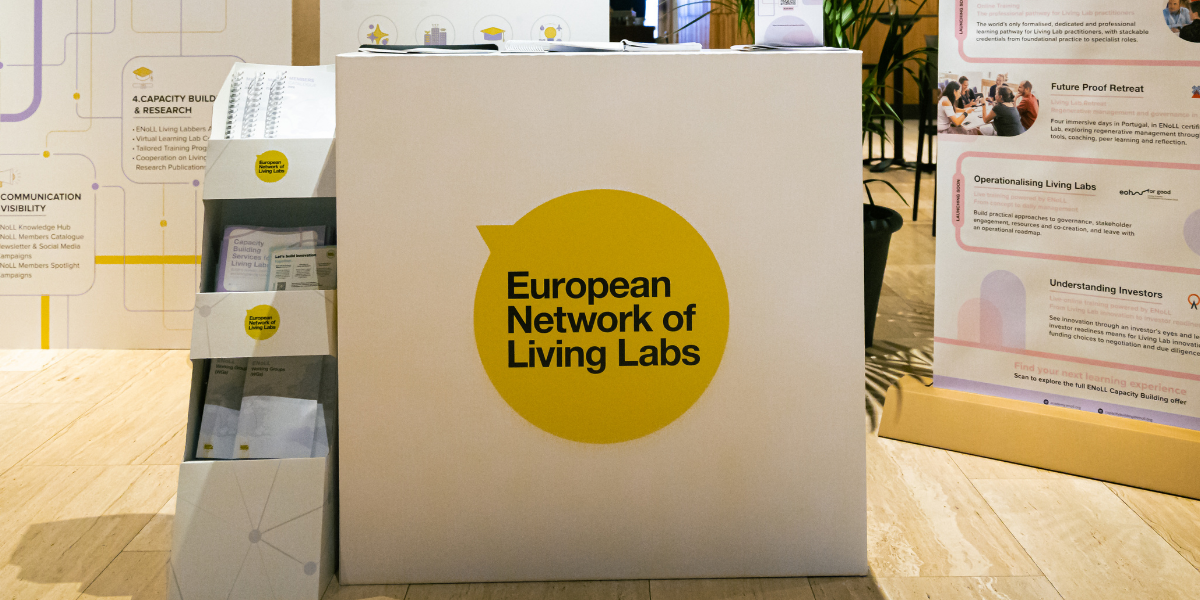
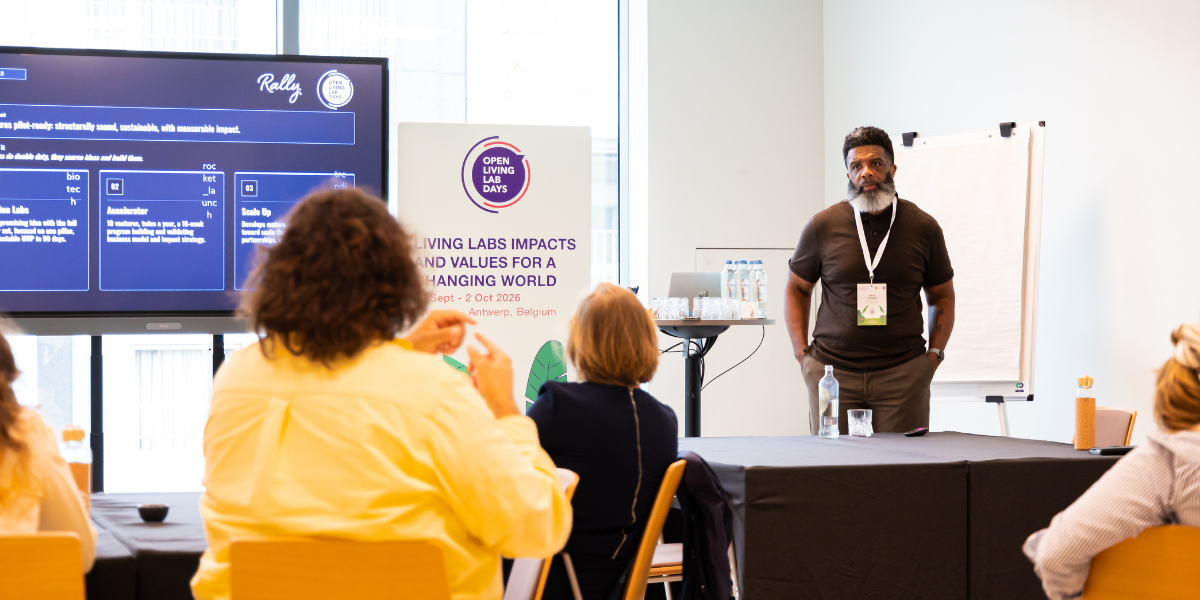
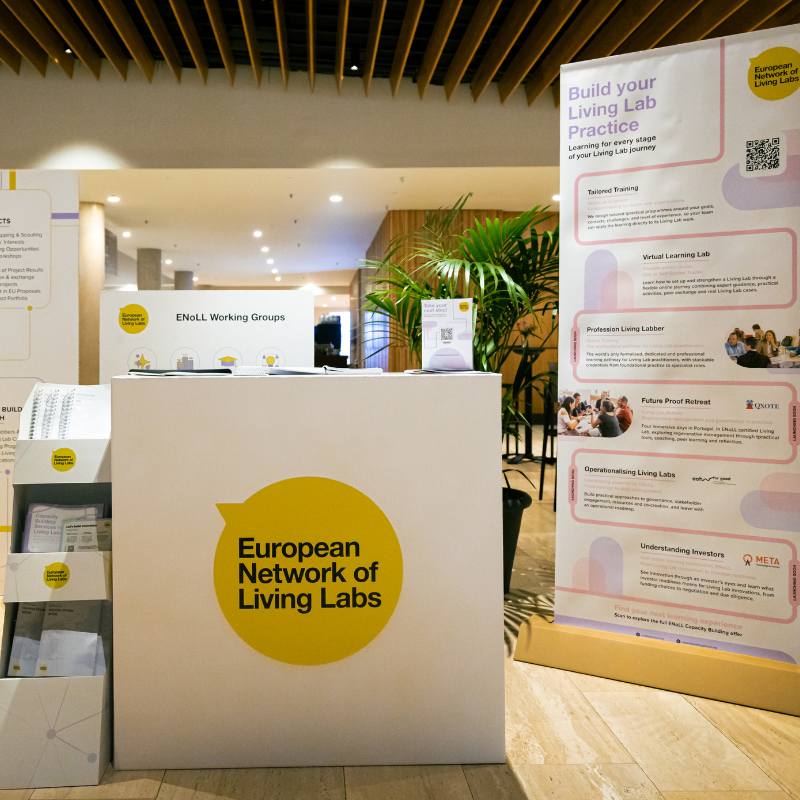
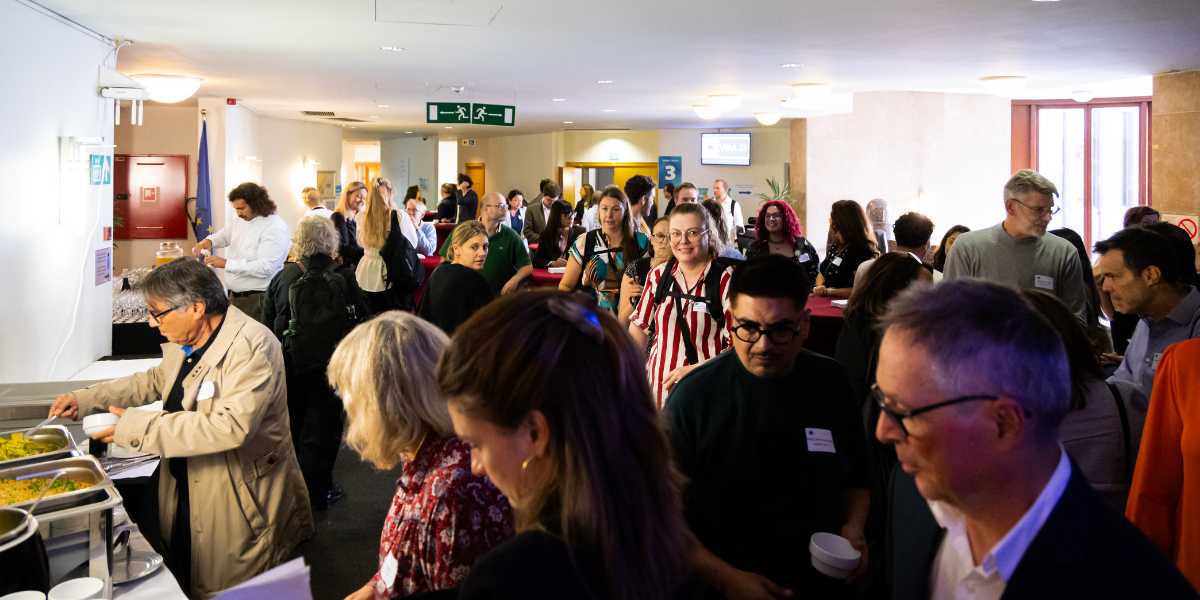
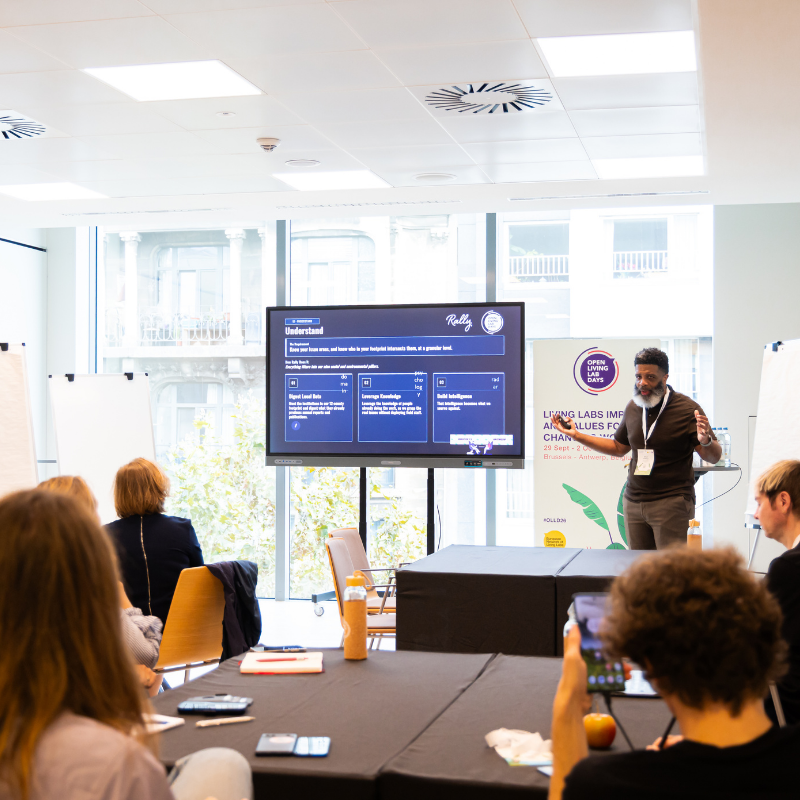
In October, Rally Executive Director Kyle Steele attended OpenLivingLab Days in Antwerp, Belgium, a gathering of the European living lab community.
Living labs are environments where solutions are developed and tested in real-world settings. They bring together people experiencing a challenge, researchers, companies, government, and other stakeholders to help shape and evaluate possible solutions.
Across Europe, living labs are working on issues ranging from health and mobility to energy, climate, agriculture, and social inclusion. What stood out was not only the scale of that work, but the question many of these ecosystems are now asking: what happens after something proves that it can work?
A successful test matters, but it does not automatically create a customer, sustainable revenue, institutional adoption, or broader impact. That next step is often where strong ideas lose momentum.
Evidence Is Part of the Adoption Conversation
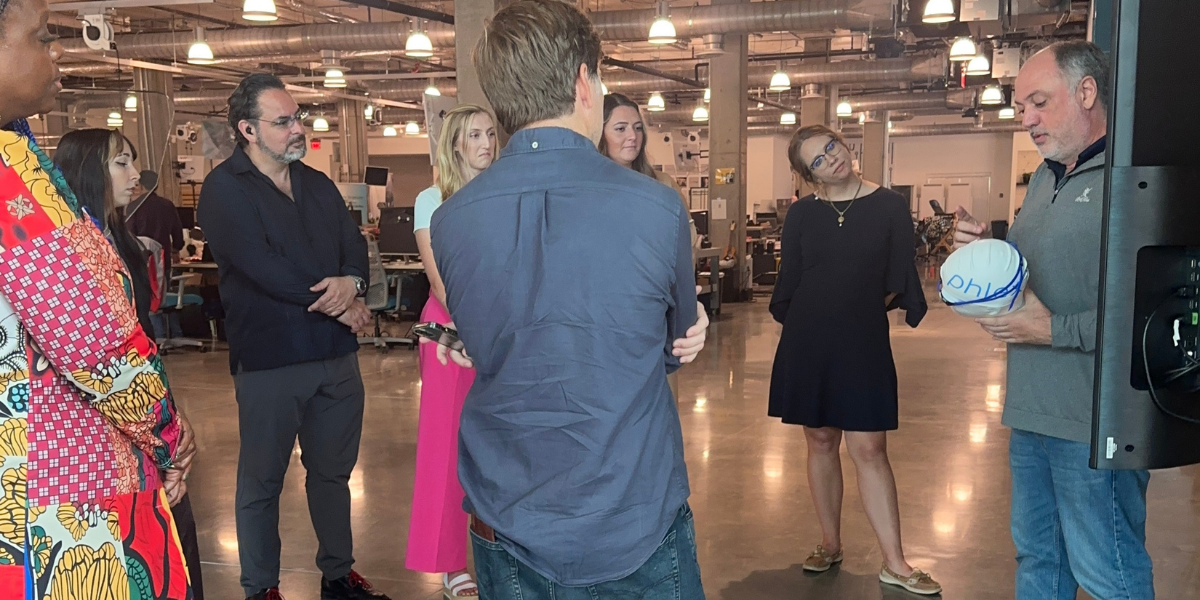
Later that month, Kyle also attended SOCAP Global in Chicago, where investors, foundations, entrepreneurs, nonprofits, and other leaders across the impact ecosystem gathered around questions of capital and social innovation.
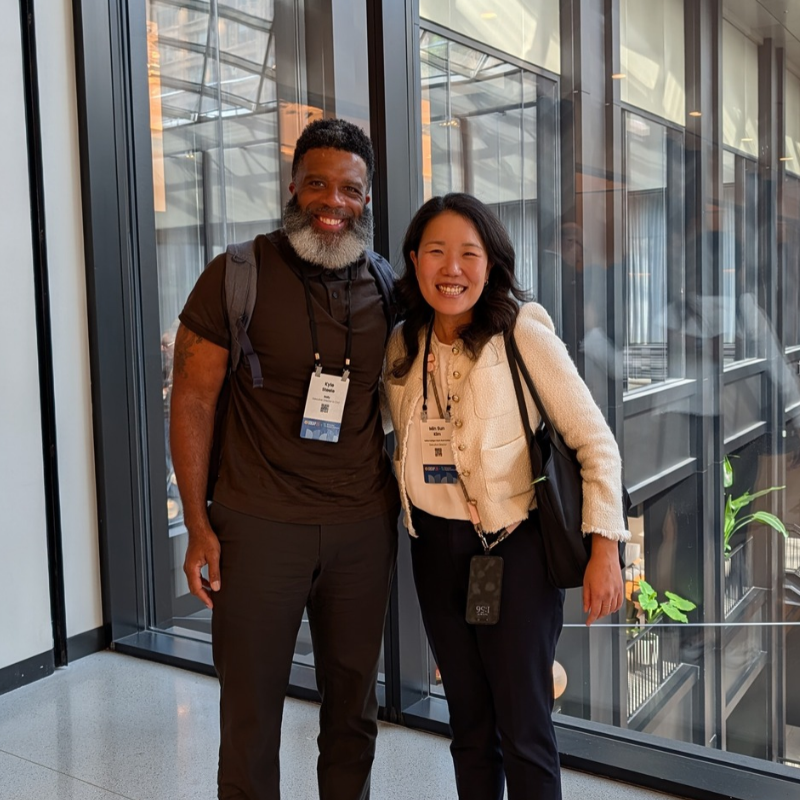
Kyle Steele, ED & COO of Rally, with Min Sun Kim, ED of the Edyth Bush Institute for Philanthropy & Nonprofit Leadership at Rollins College, at SOCAP Global 2026.
One theme surfaced repeatedly: capital matters, but capital is not always the only constraint. Decision-makers also need evidence that helps them understand whether a solution works, for whom it works, under what conditions, and whether the results are strong enough to justify taking the next step.
Evidence gives the next decision something stronger to stand on.
Those questions matter across the ecosystem. For entrepreneurs, evidence can strengthen the case for growth, investment, partnerships, and expansion. For institutions, it can reduce uncertainty around trying something new. For funders, it creates a clearer picture of whether an approach is producing meaningful results.
Looking at the Same Opportunity From Different Sides
Entrepreneurs and institutional partners often want the same thing: a solution that works. They simply carry different risks.
For founders, real-world testing can show whether a solution performs as expected, where implementation gets difficult, and what needs to improve. For institutions, testing creates a way to explore innovation without immediately committing to full adoption.
That distinction matters because large organizations operate within existing budgets, systems, responsibilities, and constraints. Bringing in something new requires confidence that the potential value is worth the effort and uncertainty.
Real-world evidence gives both sides something concrete to learn from and helps move the conversation from whether an idea sounds promising to what actually happened when it was put into practice.
Beyond the Pilot
There is a difference between running pilots and building pathways to adoption. More testing alone is not the answer.
The larger opportunity is creating stronger connections between real challenges, entrepreneurs developing relevant solutions, places where those solutions can be tested, and the partners and resources that can help successful ideas move forward.
That is the broader ecosystem Rally is working to strengthen. We work with social and environmental entrepreneurs while continuing to build relationships with institutions, community partners, and others looking for new approaches to persistent challenges.
The goal is not to prescribe what every partnership should look like. It is to help create stronger conditions for good solutions to be seen, tested, understood, and positioned for greater impact.
Why This Matters for Central Florida
The conversations in Antwerp and Chicago reinforced something we continue to see here at home: there is no shortage of promising solutions, but the path from innovation to adoption is often fragmented.
Entrepreneurs are looking for opportunities to prove what they have built. Institutions are looking for better ways to address complex challenges, while funders increasingly want stronger evidence before committing resources. Communities also need to have a meaningful role in how solutions are shaped and evaluated.
The opportunity is in connecting those pieces more intentionally.
Central Florida already has many of the ingredients needed to support that kind of ecosystem. The work now is strengthening the connections between them so more promising solutions have a real opportunity to move from idea to evidence to adoption.
Looking to test a solution, explore a pilot, or bring a new approach into your organization? Connect with us!