One Grid. Nine Pillars.

Central Florida is one of the fastest-growing regions in the country. Growth on this scale brings opportunity, and it brings pressure on our water supply, our roads, our housing, our schools, and the communities that make this region worth investing in.

Working from Thrive, the Central Florida Foundation's framework for a thriving region, Rally organizes that pressure into nine pillars: the interconnected conditions that determine whether a region truly thrives or simply expands. These aren't abstract categories. They're the lived realities of the people who work here, raise families here, and build lives here.

They're also where frontier solutions can change the trajectory, if someone sources them, tests them, and proves what works.

That's the work. Nine systems under stress. Nine places to build something better.
Energy & Water
Scale of the issue
Water demand across Central Florida is projected to increase 41% by 2045.
CFWI 2025 Regional Water Supply Plan
Florida's largest utility requested a nearly $9 billion rate hike in 2025, with household costs projected to rise at least $288 per year.
Florida Public Service Commission filings, 2025
The challenge
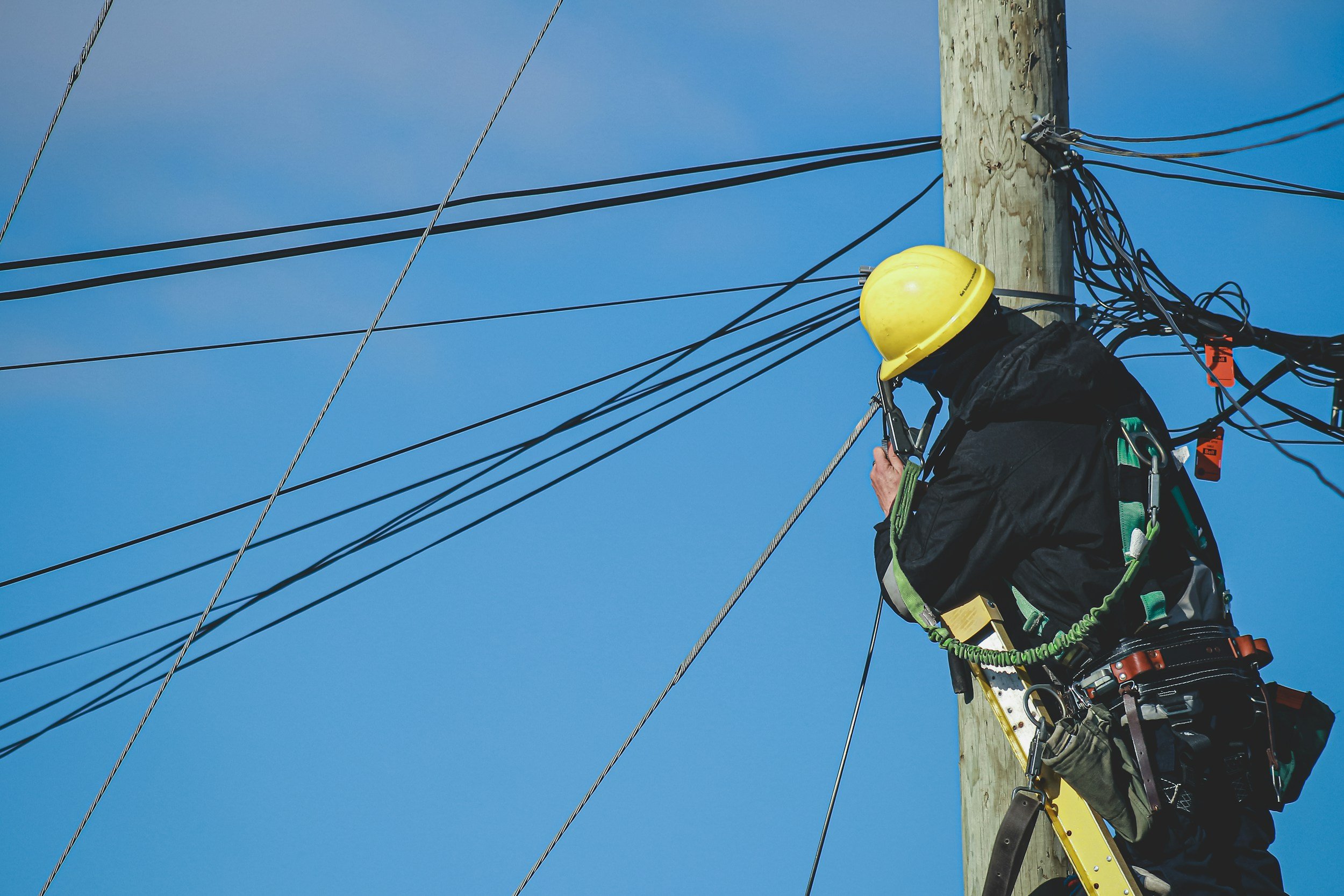
Two systems are under simultaneous strain. On the water side, the region draws heavily from the Floridan Aquifer, a shared resource being withdrawn faster than it recharges, with irrigation accounting for more than half of all consumption. On the energy side, the grid faces mounting pressure from electrification demand and extreme heat while remaining largely centralized and fossil-fuel dependent. Rising rates land hardest on households already spending more than 10% of income on utilities, who have the least ability to invest in efficiency or alternatives.
Root causes
Population growth outpacing infrastructure investment, with no corresponding expansion of aquifer recharge capacity
A built environment that treats water as abundant, with irrigation exceeding half of regional consumption
A centralized fossil-fuel grid with limited distributed renewable capacity
Rate structures that pass infrastructure costs to households least able to absorb them
Regional actors
Tap for the challenge ⌄
Land & Sustainable Materials
Scale of the issue
More than 2.2 million acres of Florida agricultural land are projected to be lost to development by 2070, roughly 45,000 acres per year.
1000 Friends of Florida
The Orange County Landfill tipping fee reached $54.20 per ton in late 2025, up from $47 the prior year.
Orange County Solid Waste, 2025
The challenge
Two pressures move in the same direction. Central Florida is converting natural land to development faster than almost any other region in the country, and wetlands and agricultural land regulate water supply and buffer flood risk, so when they disappear the cost shows up elsewhere in the system. At the same time, the materials economy runs largely one direction into the landfill, with a circular economy operating at a fraction of the scale the region requires. Land consumed and materials discarded are two ends of the same problem: a system that treats finite inputs as disposable.
Root causes
Development incentives that do not price in the ecological cost of land conversion
Only 15.8% of Florida's agricultural land currently in protected status, leaving the majority exposed to development pressure
A landfill-dominant waste system with no structural incentive for diversion until tipping fees force it
Diversion infrastructure that has not scaled to commercial and multi-family demand
Regional actors
Tap for the challenge ⌄
Mobility & Connectivity
Scale of the issue
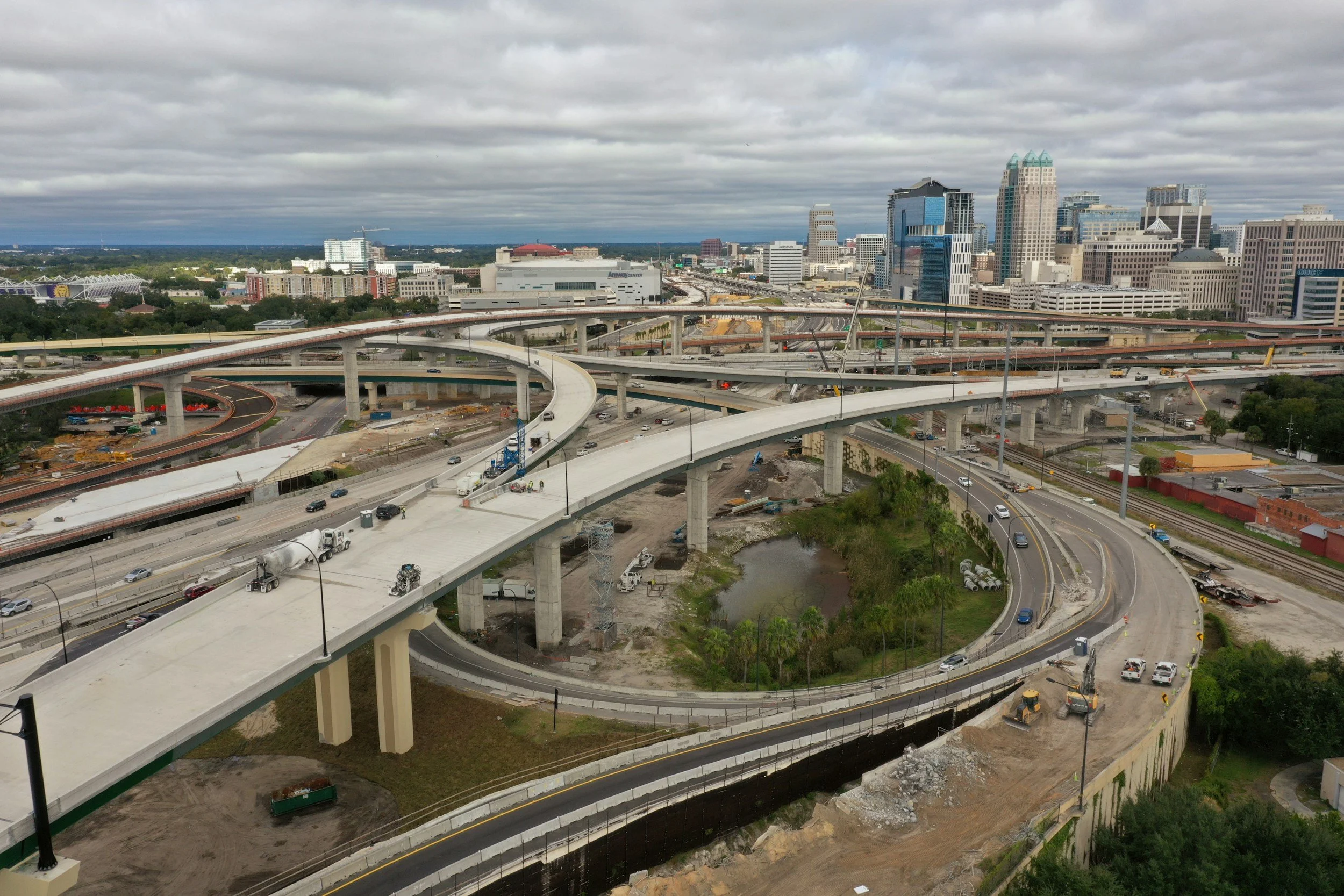
41% of the region's traffic deaths occur on just 2% of its roads, where drivers average 10 mph over the speed limit.
MetroPlan Orlando, 2024
Fatal and serious traffic crashes in Florida caused $99.2 billion in total societal harm in 2024, including $24.6 billion in direct economic costs.
TRIP, 2025
The challenge
Physical and digital access follow the same pattern. Central Florida was built for the car and continues to prioritize vehicle movement over human movement, with consequences measurable in fatalities and in the economic exclusion of residents who cannot drive. Transit is structured around downtown Orlando rather than the dispersed employment patterns of the actual region, leaving workers in Osceola, east Orange, and rural Lake and Volusia with few alternatives to car ownership. Digital equity gaps in rural counties and dense urban neighborhoods compound it, since device access and broadband affordability determine participation in education, employment, and civic life.
Root causes
A built environment designed around automobile throughput, with sparse sidewalks and minimal protected cycling infrastructure
Transit structured around the downtown core rather than dispersed regional employment patterns
Device access and broadband affordability barriers in rural counties and dense urban neighborhoods
Service delivery increasingly assuming both a vehicle and a connection, with no alternative pathway
Regional actors
Tap for the challenge ⌄
Housing & Attainment
Scale of the issue
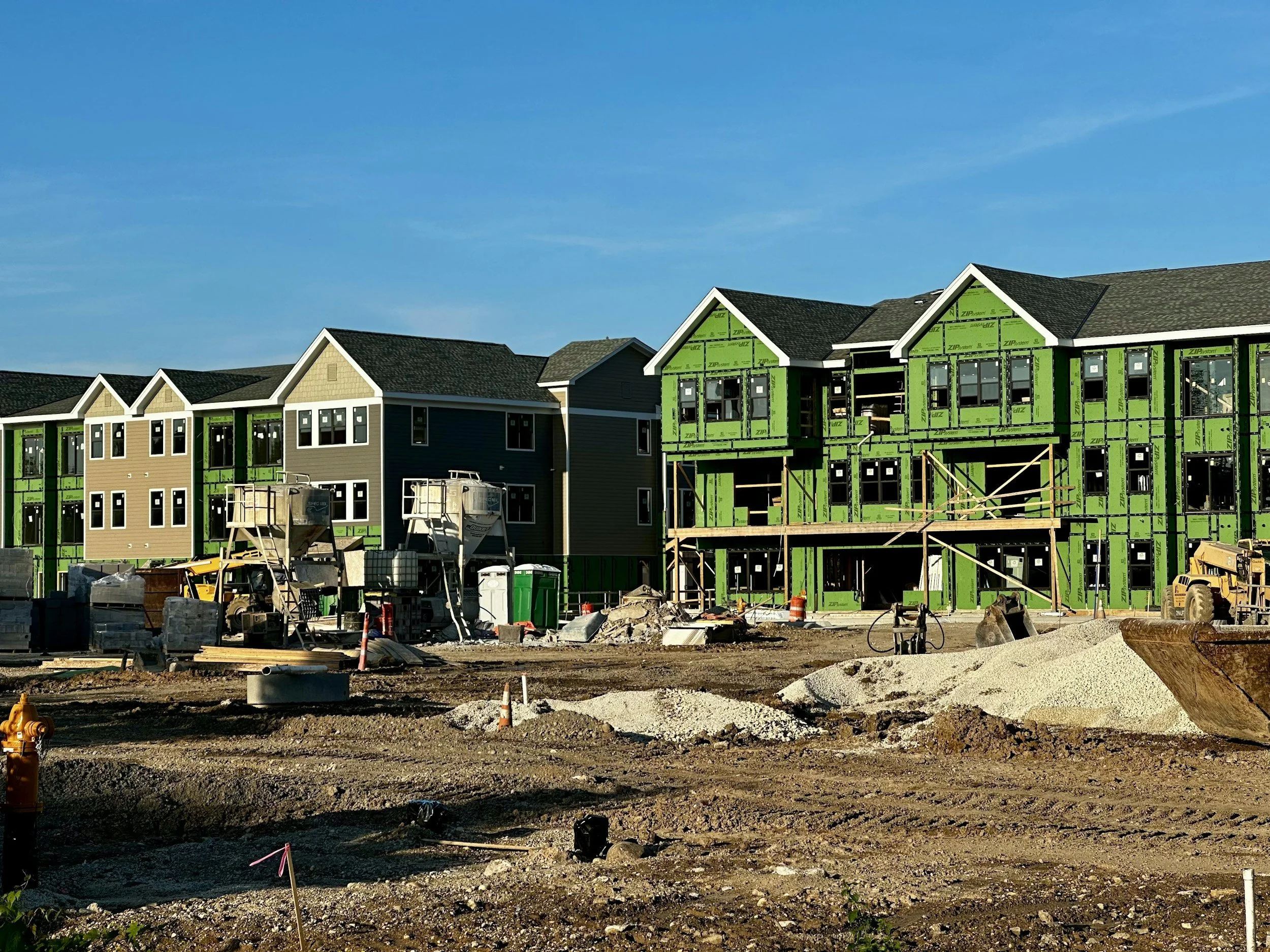
The Orlando metro ranks 6th in the nation for the housing affordability gap: 19 affordable units per 100 extremely low-income renters.
NLIHC Gap Report, 2025
A full-time Florida worker must earn $37.27 per hour, nearly $77,522 a year, to afford average two-bedroom Fair Market Rent. Florida's minimum wage is $14 per hour.
NLIHC, 2026
The challenge
The region's dominant employment sectors, including hospitality, tourism, healthcare support, and retail, pay wages that cannot support market-rate housing. Cost burden is not a marginal condition here. It defines how most working households live, and it compounds: a household spending most of its income on rent has no capacity to absorb a car repair, a medical bill, or a missed shift. Seven Central Florida counties reached record eviction filings in 2024, and an eviction record makes it nearly impossible to re-enter the rental market or qualify for housing vouchers.
Root causes
A regional economy dependent on low-wage sectors that generate employment volume without household income
A development market that cannot produce housing at price points affordable to the lowest-income households without subsidy
An eviction system that creates permanent barriers to re-entering the rental market
A response model that costs more than prevention, at $84.93 per day for a chronically homeless individual versus $26.59 for shelter-based support
Regional actors
Tap for the challenge ⌄
Education & Talent
Scale of the issue
Nearly one million job openings are coming to the region over five years, while 57% of businesses report recruitment difficulties.
OEP 2025 Talent Report
Orange County Public Schools is contending with a $41 million budget deficit and considering closing seven schools.
OCPS, 2025
The challenge
The pipeline is strained at both ends. K-12 operates under budget and staffing pressure precisely as employer demand accelerates, while on the adult side, only 18% of regional businesses are confident their workforce is prepared for rapid technological change. Underneath both sits a harder tension: 45% of Central Florida households are financially insecure, which limits the ability to invest in education and training even when programs are available and affordable, and the region's dominant industries require large numbers of workers in roles that do not pay enough to sustain a household.
Root causes
A labor market dominated by sectors that generate employment volume without sustaining wages
A K-12 system under budget and staffing pressure as employer demand accelerates
Household financial insecurity limiting participation in training even when it is available
Training pipelines aligned to job counts rather than to wage outcomes
Regional actors
Tap for the challenge ⌄
Civic Engagement
Scale of the issue
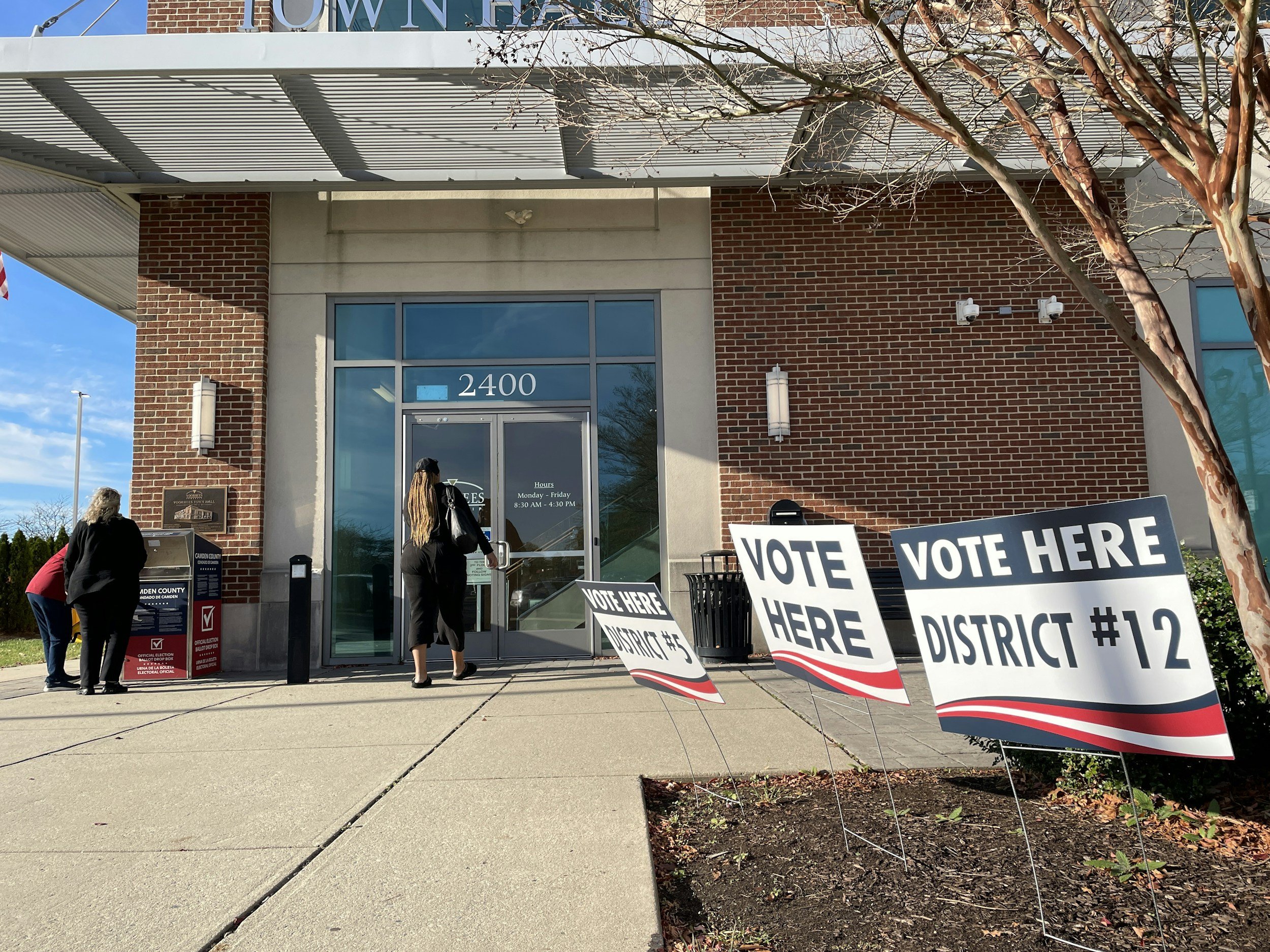
The Central Florida Foundation has documented growing disparities in voter turnout from 2008 to 2024.
Central Florida Foundation
45% of Central Florida households are financially insecure. Economic precarity is among the strongest predictors of civic disengagement.
Orlando Economic Partnership, 2026
The challenge
Fifteen years of Census Bureau data document Florida's civic health lagging national averages across volunteer rates, organizational participation, and community trust, with gaps widening rather than closing. Those gaps are not evenly distributed. Low-income residents, renters, and newer arrivals participate at significantly lower rates, and the causes are structural rather than attitudinal. Participation in zoning hearings, budget processes, and school board meetings skews heavily toward organized, resourced constituencies, leaving most residents outside the rooms where the region's most consequential decisions are made.
Root causes
Civic infrastructure unevenly distributed across the region, reflecting historical investment patterns
A policy process that produces better outcomes for organized constituencies than individual residents
Economic precarity that leaves residents without time or capacity to engage
A net loss of domestic migrants under 44 in 2024, weakening the working-age population most likely to engage in civic life
Regional actors
Tap for the challenge ⌄
Placemaking & Safety
Scale of the issue
65 people were killed walking in the Orlando metro in 2024.
TRIP, 2025
94% of regional transportation survey respondents said planners should prioritize pedestrian-friendly communities.
MetroPlan Orlando, 2024
The challenge
Public space here is organized around the car, commercial activity, and private property, leaving few places where residents share space by choice and build social trust. Safety is inseparable from that design, because streets built for speed are streets where people die. The near-unanimous public mandate for pedestrian-friendly communities is not reflected in the region's infrastructure investment patterns, and the same planning decisions that produce hostile arterials also produce neighborhoods without the parks, sidewalks, and gathering places that make people want to be outside in the first place.
Root causes
A planning tradition built around automobile throughput, producing arterials hostile to pedestrians
Uneven investment in parks and neighborhood infrastructure, with lower-income neighborhoods receiving fewer amenities per capita
A safety model treating safety as law enforcement rather than design
Corridors without the organizational capacity to maintain safe, vibrant public environments
Regional actors
Tap for the challenge ⌄
Economic Development
Scale of the issue
45% of Central Florida households are financially insecure despite strong regional GDP growth.
Orlando Economic Partnership, 2026
Orlando experienced a net loss of domestic migrants in 2024, concentrated among residents under 44, with growth sustained only by international migration.
Orlando Economic Partnership, 2026
The challenge
The regional economy is growing, but not evenly and not in ways that translate to household security. Growth has concentrated in sectors that generate GDP without building wealth, so aggregate performance can look strong while most households remain a single disruption away from crisis. Affordability is now eroding the region's ability to retain the working-age talent its economy depends on. At the small business end, formation is strong but survival rates lag, with capital access, networks, and technical assistance remaining persistent barriers.
Root causes
An economy concentrated in low-wage sectors generating GDP without household wealth
A capital access system producing worse outcomes through credit scoring and collateral requirements
A development strategy prioritizing business attraction over wage growth and household stability
Main Street corridors representing hundreds of millions in local economic activity without the professional capacity or capital access to maximize it
Regional actors
Tap for the challenge ⌄
Health & Wellness
Scale of the issue
More than 180,000 people in Orange County go without basic healthcare because they cannot afford or access it.
Grace Medical Home
Florida ranks 46th in the country for mental health access to care, with more than 1,300 people on the state safety-net behavioral health waitlist every month.
Mental Health America state rankings
The challenge
Physical and behavioral health face parallel shortages. On the physical side, a provider shortage relative to population meets a large uninsured and underinsured population with no affordable coverage pathway. On the behavioral side, the gap is sharper still: 61.4% of Florida adults with a mental illness receive no treatment, above the national average, with cost and insurance access identified as the primary barriers. Both are compounded by social determinants, since housing instability, food insecurity, and lack of transportation prevent residents from benefiting from care even when they reach it.
Root causes
A large uninsured and underinsured population with no affordable coverage pathway
A provider shortage relative to regional population growth
A behavioral health safety net structurally underfunded relative to regional need
Social determinants that prevent residents from benefiting from care even when they access it
Regional actors
Tap for the challenge ⌄

Leading The World From Central Florida

The Rally Grid is a global blueprint. We invite institutions to learn from our model and insight, export our "Testing and Learning" framework, and collaborate on solutions that can be scaled in communities everywhere.
Contact Us Today