
GroundUp: Building From Waste
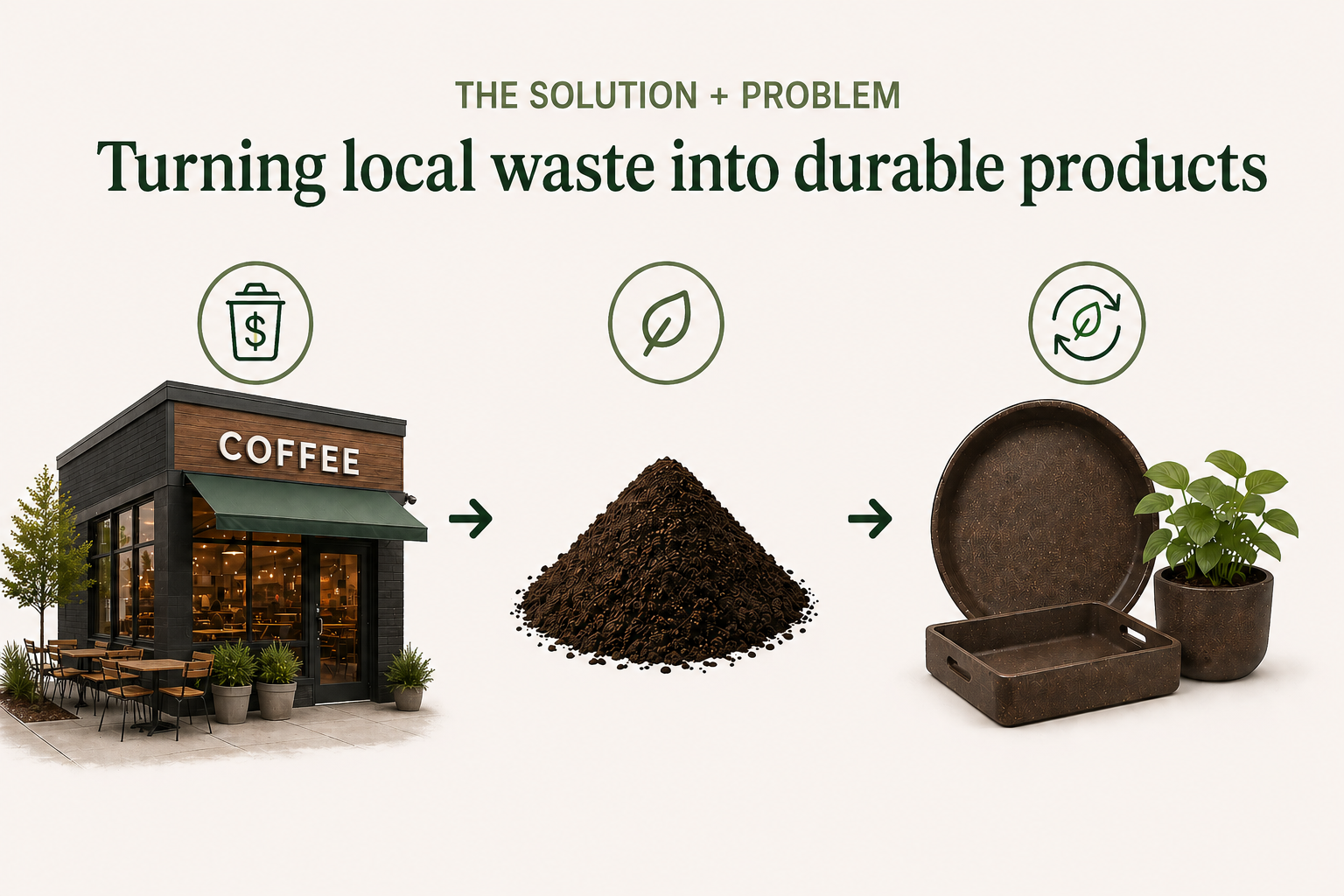
What if waste could become feedstock?
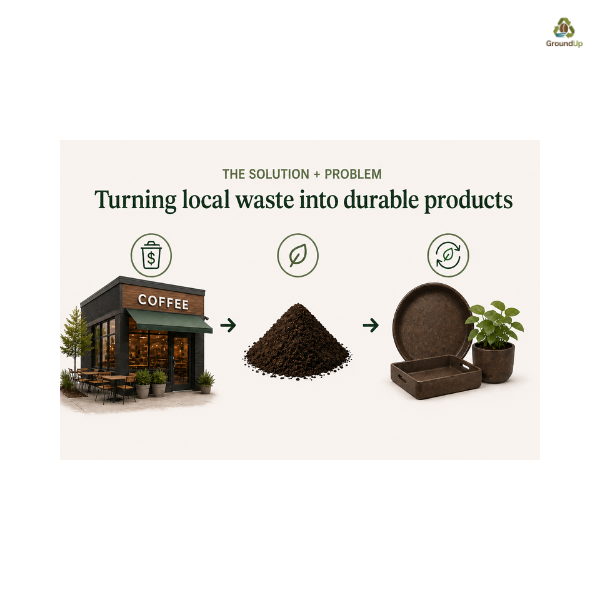
That question is at the center of GroundUp, a sustainable manufacturing venture founded by Elvina Beck. GroundUp is turning everyday waste, including coffee grounds, fruit scraps, textile remnants, cigarette filters, and marine-bound plastic, into high-performance biodegradable products that can work within existing manufacturing systems.
The idea is simple but powerful: alternatives to virgin plastic do not always need to be invented from scratch. Some of the raw materials are already sitting in café trash bins, kitchen compost, and waste streams. GroundUp is working to put them to use.
Seeing Waste Differently
Elvina is a licensed general contractor and the founder of PodShare, a co-living hospitality company. Through building hotels and operating shared housing, she saw how much waste organizations generate and how often they pay twice: once to remove discarded materials and again to purchase new plastic products.
That contradiction became difficult to ignore.
Organizations are buying virgin plastic while also paying to dispose of materials that could potentially become part of a new supply chain. For Elvina, the system felt upside down.
GroundUp began with a single question: what if waste could become the material that replaces plastic?
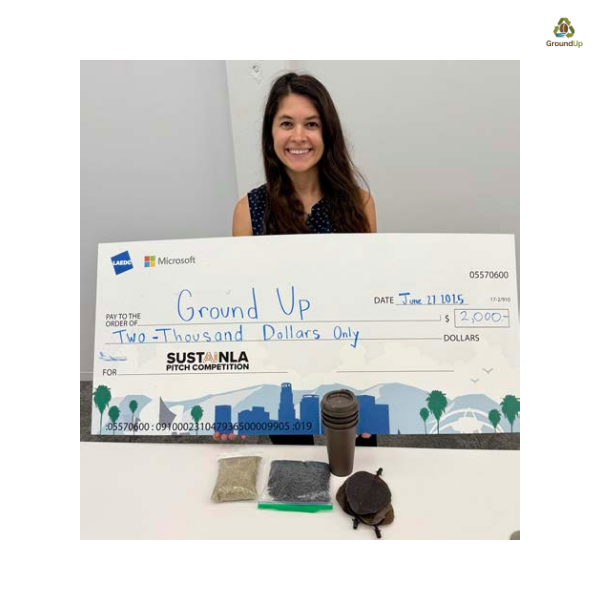
She started by collecting used coffee grounds from a café and partnering with engineers who gave her access to 16-ton injection molding machines. Through testing, failure, iteration, and material experimentation, GroundUp began developing formulas that perform like plastic without behaving like plastic in the environment.
The Problem With Plastic
Plastic is deeply embedded in modern manufacturing. Plant pots, crates, fashion, household products, light fixtures, cleaning bottles, and countless other products rely on petroleum-based plastic.
Much of that plastic can remain in landfills for generations while contributing to microplastic pollution in soil, water, and the broader environment.
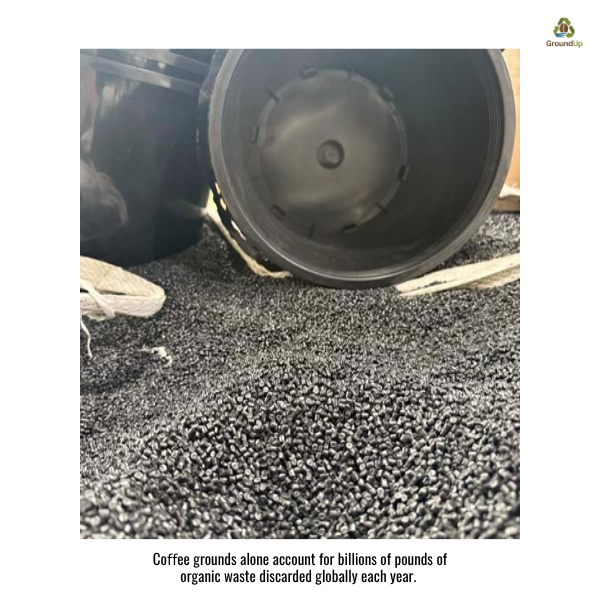
At the same time, organic waste that could potentially offset some of that plastic is often sent to landfills, where it can release methane as it breaks down. Coffee grounds alone account for billions of pounds of discarded organic waste globally each year.
For GroundUp, this presents both an environmental challenge and a manufacturing opportunity.
There is a circular economy hiding in plain sight. GroundUp is working to close the loop.
How GroundUp Works
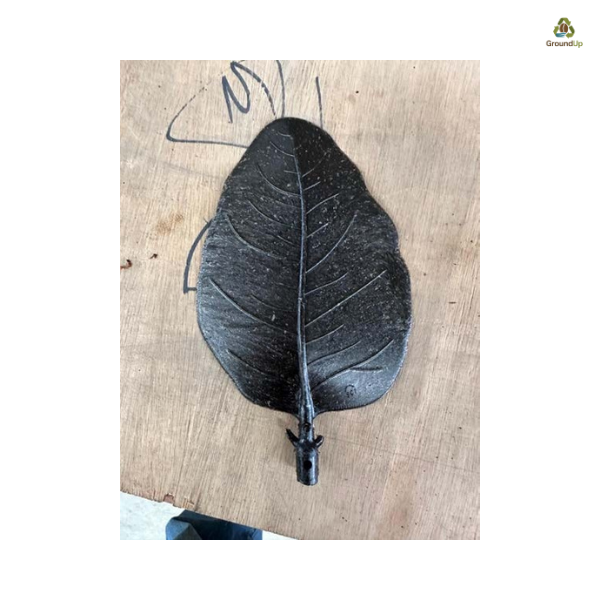
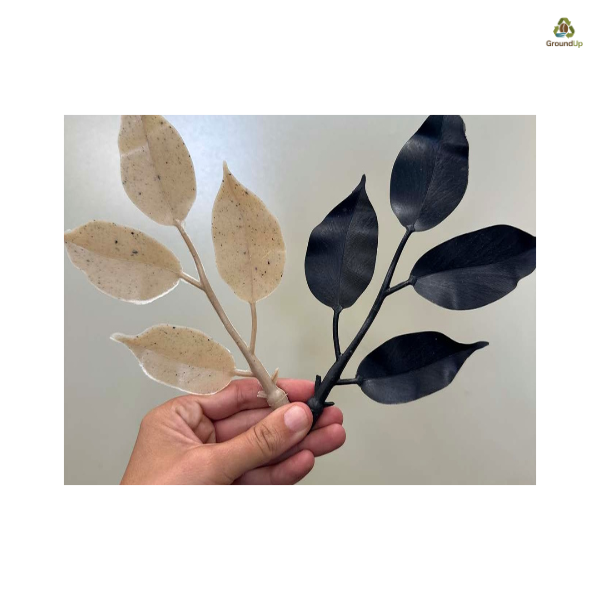
GroundUp creates sustainable pellets that can run on standard injection molding and heat press equipment. The material can combine up to 40 percent filler, such as biochar, coffee waste, or passion fruit rinds, with cellulose acetate sourced from cigarette filters or recycled polypropylene from marine-bound plastic.
The goal is to create drop-in replacements for conventional plastic that can produce finished parts with strong performance, lower environmental impact, and biodegradability at the end of life.
GroundUp’s business model is built around partnerships with three groups:
Manufacturers that need local, reliable feedstock to replace high-volume plastic parts
Brands that want more sustainable products without redesigning their tooling
Municipal systems that benefit from lower waste-management costs and stronger regional supply chains
GroundUp’s first product is a biodegradable plant pot designed to perform like plastic without lasting for generations.
The venture is also piloting GroundUp x Stellar Lighting Systems, testing sustainable replacement components for existing aluminum and plastic light fixture parts using Stellar’s current molds. The early prototype performs, the mold works, and the part is designed to return to nature at the end of its useful life.
What’s Next
Coming out of the Rally cohort, GroundUp is focused on three major milestones.
First, the team is working to scale the Stellar Lighting pilot from prototype into a production run that can be measured against virgin-plastic baselines for cost, performance, and waste diverted. GroundUp is also sending its bio-based plant pot samples to nurseries, farms, and hardware stores for consideration.
Second, GroundUp is opening conversations with municipal partners and additional manufacturers ready to pilot drop-in sustainable materials in their own product lines, either on GroundUp’s machines or through pelletization.
Third, the team is developing a heat-pressed formula for wall panels in the construction and design industry.
GroundUp is measuring what matters: pounds of waste diverted, pounds of virgin plastic displaced, percentage of local production, and prototype performance scores.
Every number moved is a problem solved twice: keeping waste out of landfills and keeping plastic out of the supply chain.
If you are a manufacturer, brand, municipality, or funder interested in helping close the loop, GroundUp wants to hear from you.
Learn more at CoffeeGroundUp.com or contact elvina@podshare.com.

About the Author
Elvina Beck is the founder of GroundUp, a sustainable manufacturing venture turning everyday waste into high-performance biodegradable products. She is also a licensed general contractor and the founder of PodShare, a co-living hospitality company.
Website: CoffeeGroundUp.com
Contact: elvina@podshare.com
About Rally
Rally is a civic innovation platform that connects entrepreneurs, institutions, and community partners to test and strengthen solutions addressing real social and environmental challenges. Through workshops, accelerators, partnership opportunities, and ecosystem engagement, Rally helps move promising ideas toward real-world impact.
Learn more at www.rallysea.com.